

MAKING SENSE OF THE FRACTIONAL COO ROLE
Written by Jessica Murray
There’s always a ceiling. Whether you’re a first-time entrepreneur or a repeat, every stage of growth brings a new one to break through.
Depending on the business stage and team size, you may reach a crossroads where breaking through the next ceiling takes more than you can do alone or with existing resources. You’ll explore your options: Consultant, Advisor, Operations Manager, AI Agents, General Manager, Chief of Staff, COO and Fractional COO.
Lots of great options, but a lot to decide. The question becomes: What’s the right path for you?
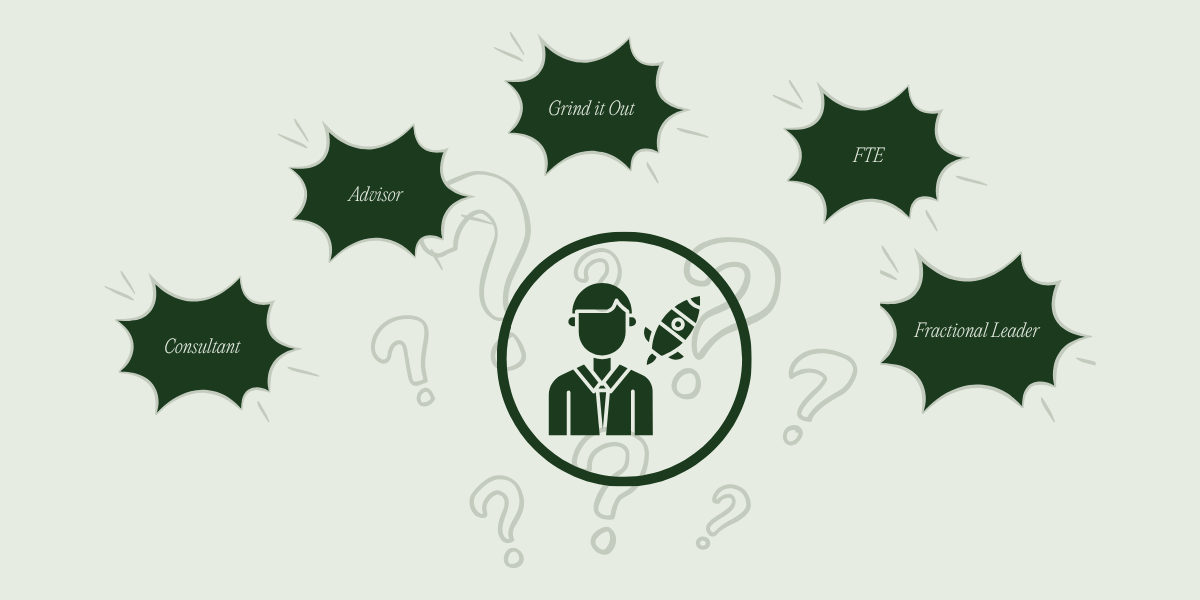
Empower provides three:
Advisory (Empower Hours or Empower Progress)
Project-Based Consulting (The Empower Method)
Fractional COO (Empower Complete)
If you’re in that spot where you need resources to accelerate growth, but feel stuck selecting the right one, it’s time to simplify. In this post, I’ll focus on one to help clarify: the Fractional COO.
Two questions
Let’s assume that you’ve decided that a full-time employee is not the path you’ll choose right now. There are two questions you can ask to narrow the ongoing evaluation:
Question #1: Do you need someone who can go deep on a problem, diagnose the cause, point you to the fix, sometimes build it and then hand you the keys? Or do you want someone more embedded to help the business run?
The advisors are a sounding board. You bring them your thinking or challenges, and they offer their expertise to bring clarity and guide next steps.
The consultant studies the business and provides a roadmap. Deep thinking, clarified recommendations. The work of making it real stays with you, unless you expand the scope to have fully implemented solutions delivered.
The fractional operator builds. They get deeper into the business, not to study it from the outside and report back, but to step inside it and own how it runs. They build the missing pieces: the decision-making structure, the workflows, the cadence, the accountability. And they stay long enough to make sure it holds, training your team to run it without them.
None are bad choices. It’s a function of what you need in this moment and whether you have the time, capacity and skill to turn a working plan into an operational reality.
Question 2: What’s the level of complexity you’re managing?
How connected are the problems you’re trying to solve?
Do the bottlenecks live in one function or spread wider?
If the answer is the latter, then a Fractional COO may be the right solution.
As a Fractional COO, I’ve:
Installed new operating systems and rhythms.
Built new processes so a founder could better elevate above the noise.
Taken the long-term vision and built a focused cross-functional operating plan.
Led the execution of that plan.
Clarified accountability and ownership to protect focus on what moves the needle.
Shaped hiring and organizational design.
Supported capital-raising activities.
And more…
None of this is isolated to one place. I’m orchestrating the big picture.
Do I need one?
So, when does a Fractional COO make sense?
You’re the only founder. When there’s no co-founder to share the load, running the whole business defaults to you. You’ve been bearing this weight a long time, and the load is becoming a liability.
Something bigger is on the horizon (fundraise, market expansion, significant pipeline that’s about to convert) and it’s clear the current way the business functions won’t support what’s coming.
You’ve moved from a team you can count on one hand and always get in a huddle to one that’s spanning multiple functions, and with a group that can’t just get pulled into one room (virtual or IRL).
The ROI
We all want a strong return on our investment.
Fractional COOs are a solution to mitigate momentum slowdown as the business grows more complex.
The founder's time savings enable more focus on growth strategy and things only you can do.
The cost savings from gaining operational leadership without the full-time price tag, as well as from the reduction of operational drag.
The real upshot? The time and money freed up don’t sit idle. It can be reinvested in growth: customers, revenue generation, capital, R&D and team.
My two cents
A Fractional COO isn’t only about taming chaos, cleanup and getting entrepreneurs out of the weeds. That’s all real, but it’s table stakes. The real power is in having this resource as a meaningful growth lever. The systems I reinforce and build don't just reduce mess; they shape how fast you can grow and how it feels to be your customer along the way.
My background spans business operations, customer success, product and go-to-market, so I tend to connect how a business runs to how it makes money and keeps customers, not just whether the back of the house is neat.
This fits single-founder-led businesses in their “second stage.” There’s real revenue traction, the team has grown to 10+ (full-time, contractor or combination) and the business requires the founder to lead the company instead of holding it all together.